


A guide to choosing sliding pads in logsplitters: brass vs Teflon
In the development and design ofprofessional log splitters, the choice of material for the sliding guides is essential. The splitting wedge and the moving structure are subjected to enormous loads, constant friction, and high pressure.
To ensure maximum efficiency, reliability, and long service life,Rosselliuses two distinct technical solutions:brass sliding padsfor the larger industrial models andTeflon (PTFE) sliding padsfor log splitters with tubular structures. Let’s look at the advantages of each material and how to carry out proper maintenance.
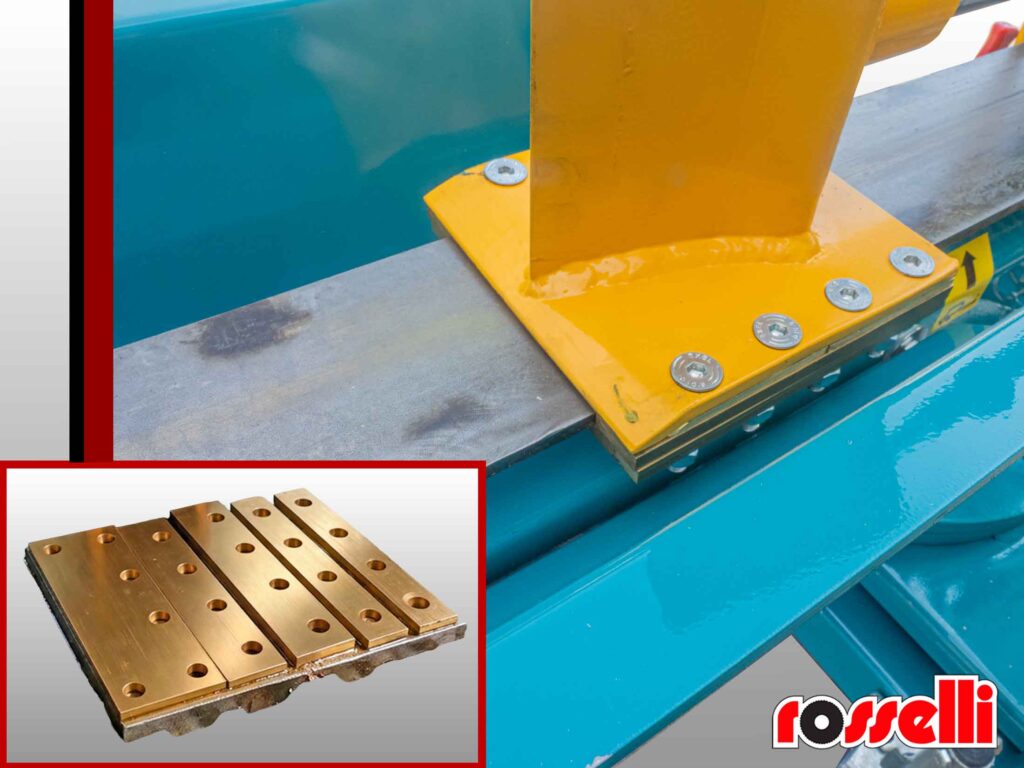
Brass sliding pads: maximum durability for large logsplitters
On large models, the hydraulic forces involved are massive, often exceeding 10-15 tons, and the logs to be split present knots and extreme hardness. For these professional machines, Rosselli chooses brass.
- Very high mechanical strength:Brass is a robust metal alloy. It does not deform under extreme impact loads and withstands pressures that would destroy plastic materials.
- Low metal-on-metal friction coefficient:Brass slides on the steel structure, such as H or I beams, reducing wear on the components.
- Heat resistance:During prolonged intensive use, friction generates heat. Brass maintains its mechanical properties even at high temperatures.
- Heavy-duty construction:It is a premium solution designed for intense professional use, where the machine works many consecutive hours.
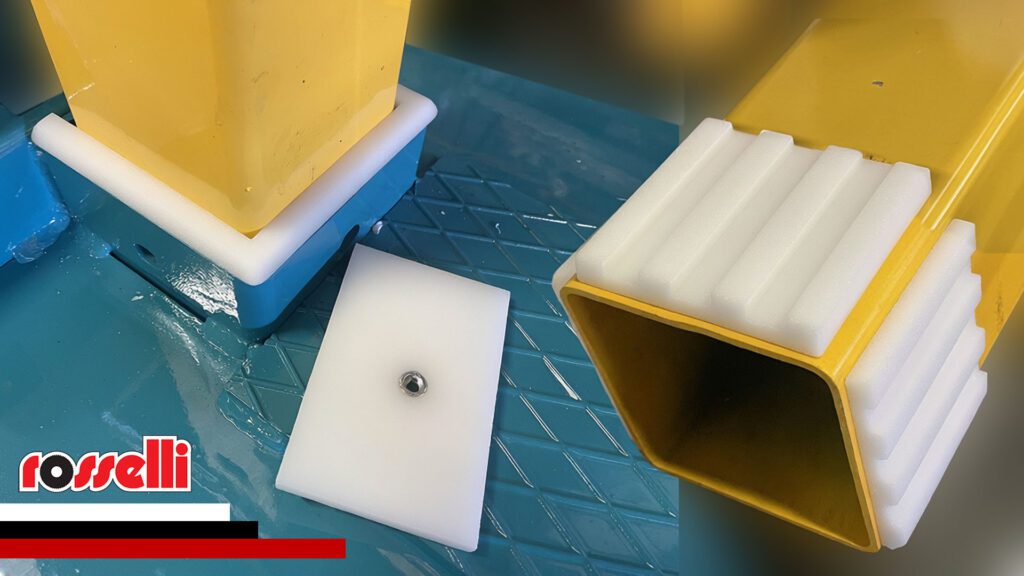
Teflon (PTFE) sliding pads: smooth movement for tubular structures
Here is the English version of the HTML content, preserving the structure: “`html“`
In Rosselli log splitters with a tubular structure (square or rectangular), the sliding dynamics change. Here, the use of Teflon offers specific strategic advantages.
- Excellent self-lubrication:Teflon has one of the lowest coefficients of friction among solid materials. It allows smooth sliding even without constant lubrication.
- Vibration absorption:As an elastic polymer, Teflon absorbs light impacts and vibrations typical of tubular structures, making the work quieter.
- Surface protection:Teflon does not scratch or wear the steel of the inner tubular structure. This preserves the machine’s integrity over time.
- Tolerance to impurities:Sawdust, dust, and bark residues do not cling to Teflon, reducing the risk of jamming inside the tubular frame.
Maintenance tips for log splitter slide pads
To maintain the performance of the log splitter and extend the service life of the guides, follow these simple maintenance rules:

Maintenance of brass sliding pads
- Preliminary cleaning:Before starting work, always remove any sawdust, resin, or bark residue from the steel guides.
- Regular lubrication:Brass requires regular lubrication. Apply a thin layer ofmulti-purpose lithium greaseor a specific high-pressure grease directly onto the sliding guides.
- Frequency:Grease the guides every4–8 hours of continuous work, or at the start of each intensive splitting session.
- Play check:Periodically check that there is no excessive play between the pad and the guide. Rosselli brass pads are adjustable or easy to replace once worn.
“`
Maintenance of Teflon sliding pads
- Dry cleaning:Teflon is self-lubricating, but abrasive dirt, such as soil or sand on the bark, can scratch it. Clean the inner tubular structure with a cloth.
- Minimal lubrication:Do not overdo conventional grease. Excess thick grease inside the tubular structure attracts sawdust, creating an abrasive paste. Prefer adry PTFE sprayor a very light layer of light grease.
- Visual inspection:Check the wear condition of the pad at the end of the season. If the thickness becomes too reduced, replace the pad to prevent the metal guide from touching the tubular structure.
Conclusions: two materials for two different needs
There is no single best material in absolute terms, but there is the right solution for every specific application. Rosselli has successfully placed the pads in the right position according to the structural and power characteristics of the log splitter:
- Brassis used wherebrute force, heavy-load resistance, and extreme longevityare needed (large professional log splitters).
- Teflonis used wheresmooth sliding, vibration reduction, and geometry protectionare needed (tubular log splitters).
Thanks to this precise engineering choice, each Rosselli machine offers maximum performance and the lowest possible maintenance for its specific use segment.